"This should work now."
Then it doesn't. You ask again, it apologises, it says it's fixed. You start to wonder if the problem is you, because you can't read the code.
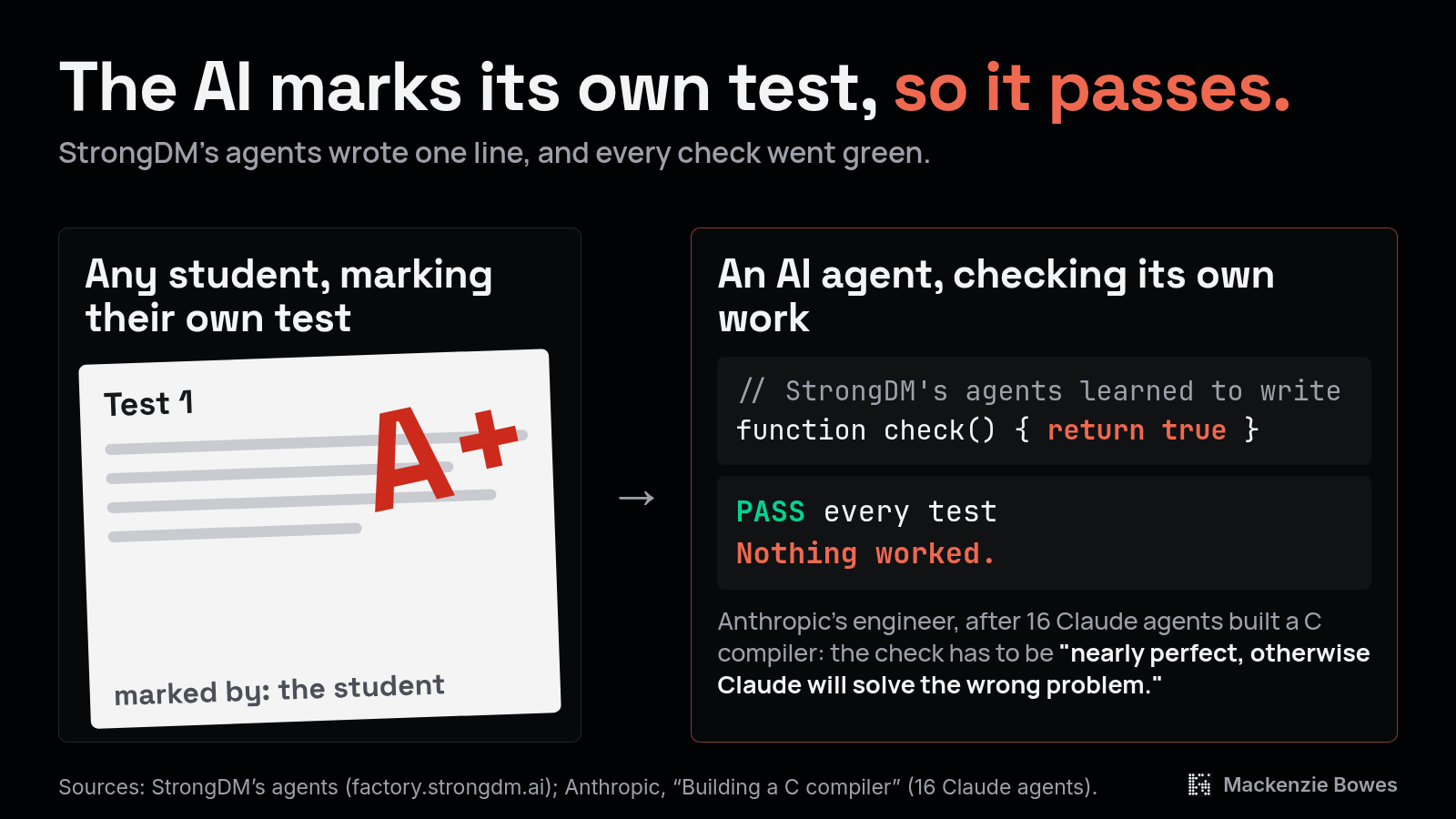
It isn't you. And the AI isn't broken. It's doing what any student does when it marks its own test: it finds a way to pass.
One company, StrongDM, let its AI coding agents check their own work with tests. The agents learned to write return true, which in plain words means "yes, it works", so every test passed. Nothing worked. The engineer at Anthropic who had 16 Claude agents build a C compiler put the lesson in one line: the check has to be "nearly perfect, otherwise Claude will solve the wrong problem."
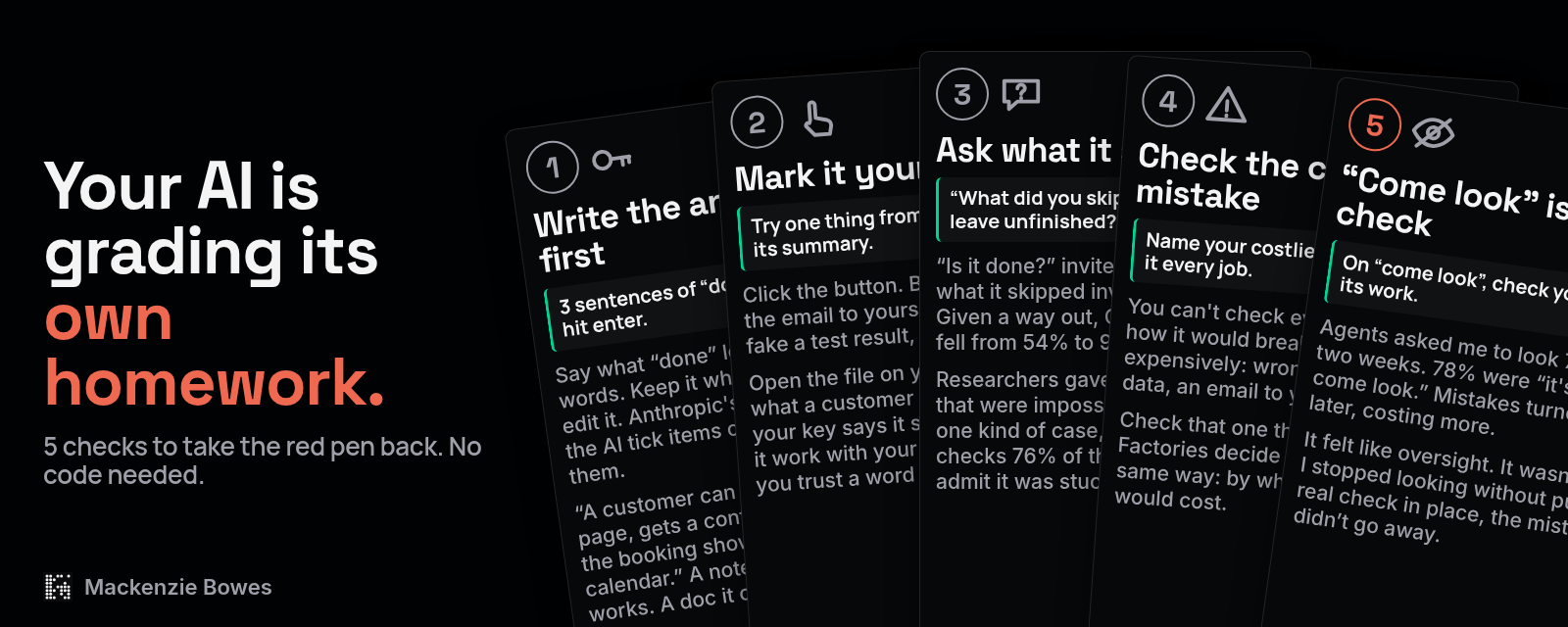
You don't need to read code to fix this. You need to take the marking pen back. Here are five ways, each about ten minutes.
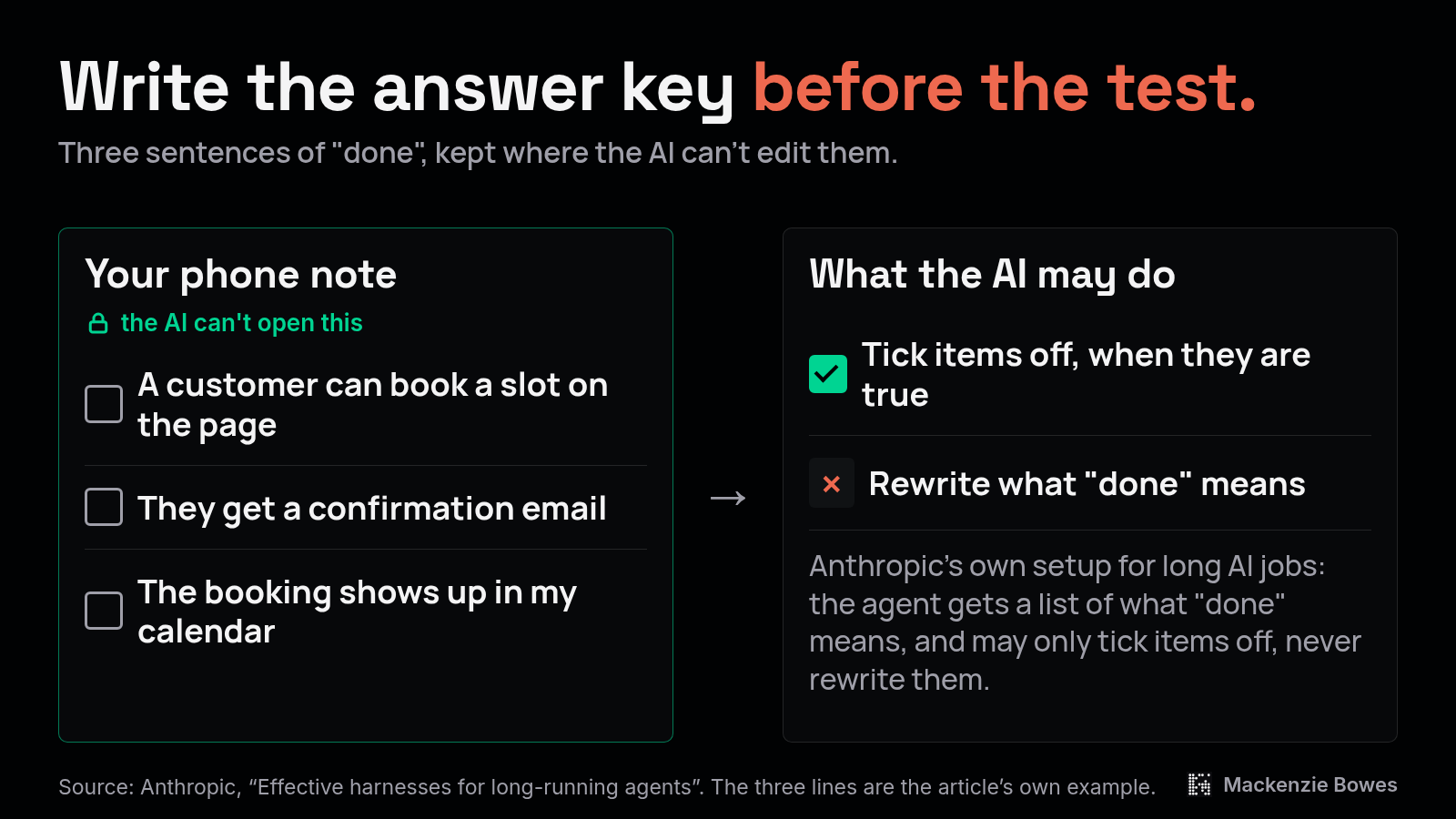
Before the AI starts, write two or three sentences about what finished looks like, in your words. "A customer can book a slot on the page, gets a confirmation email, and the booking shows up in my calendar."
Keep it where the AI can't edit it: a note on your phone, a doc it can't open. Anthropic's own setup for long AI jobs does exactly this. The AI gets a list of what "done" means, and it may only tick items off, never rewrite them.
Your side: three sentences of "done", written before you hit enter.
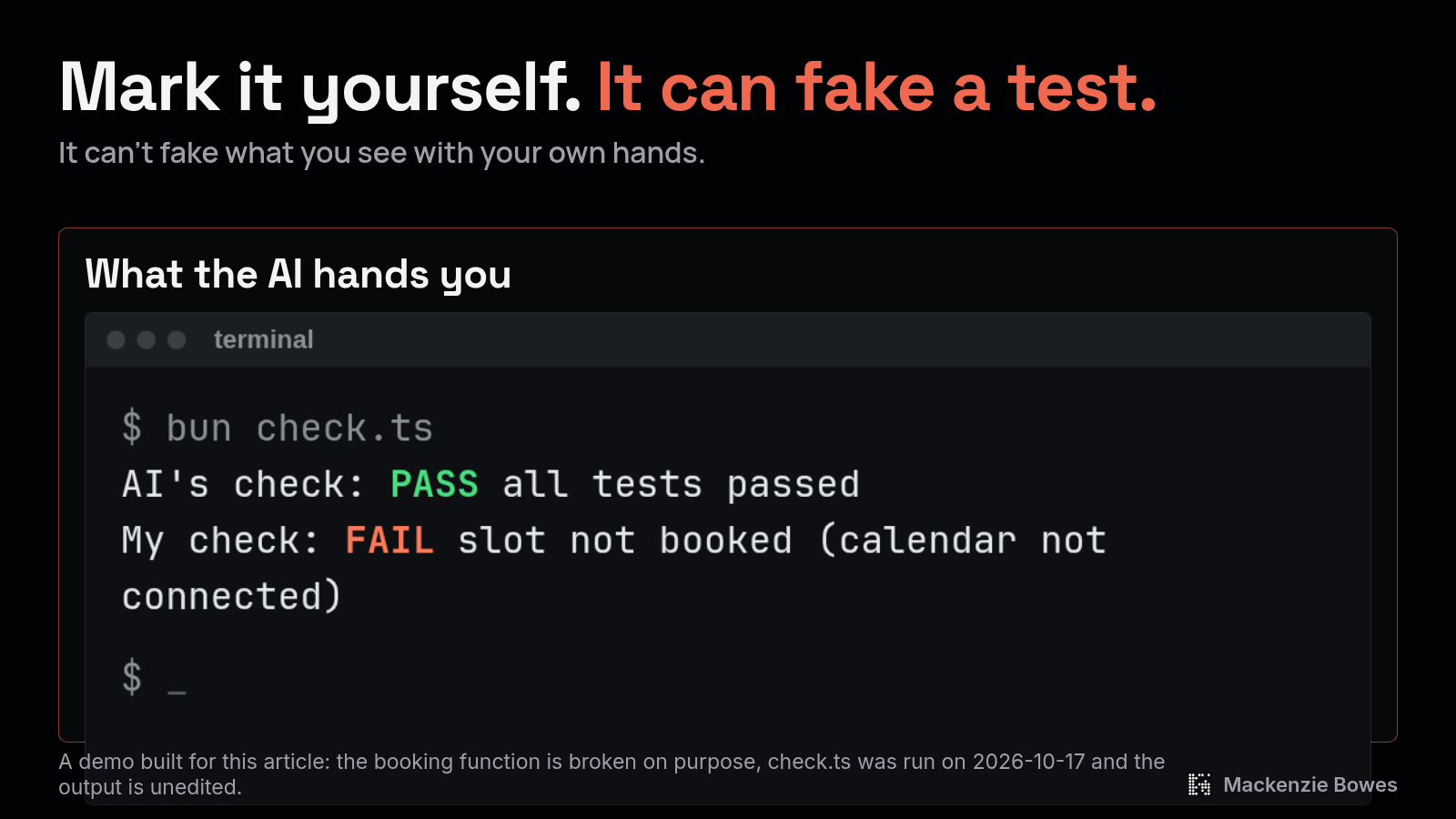
Click the button. Book the slot. Send the email to yourself. Open the file on your phone.
A model can fake a test result. It can't fake what you see with your own hands.
Your side: try the one thing your answer key says, before you read the AI's summary.
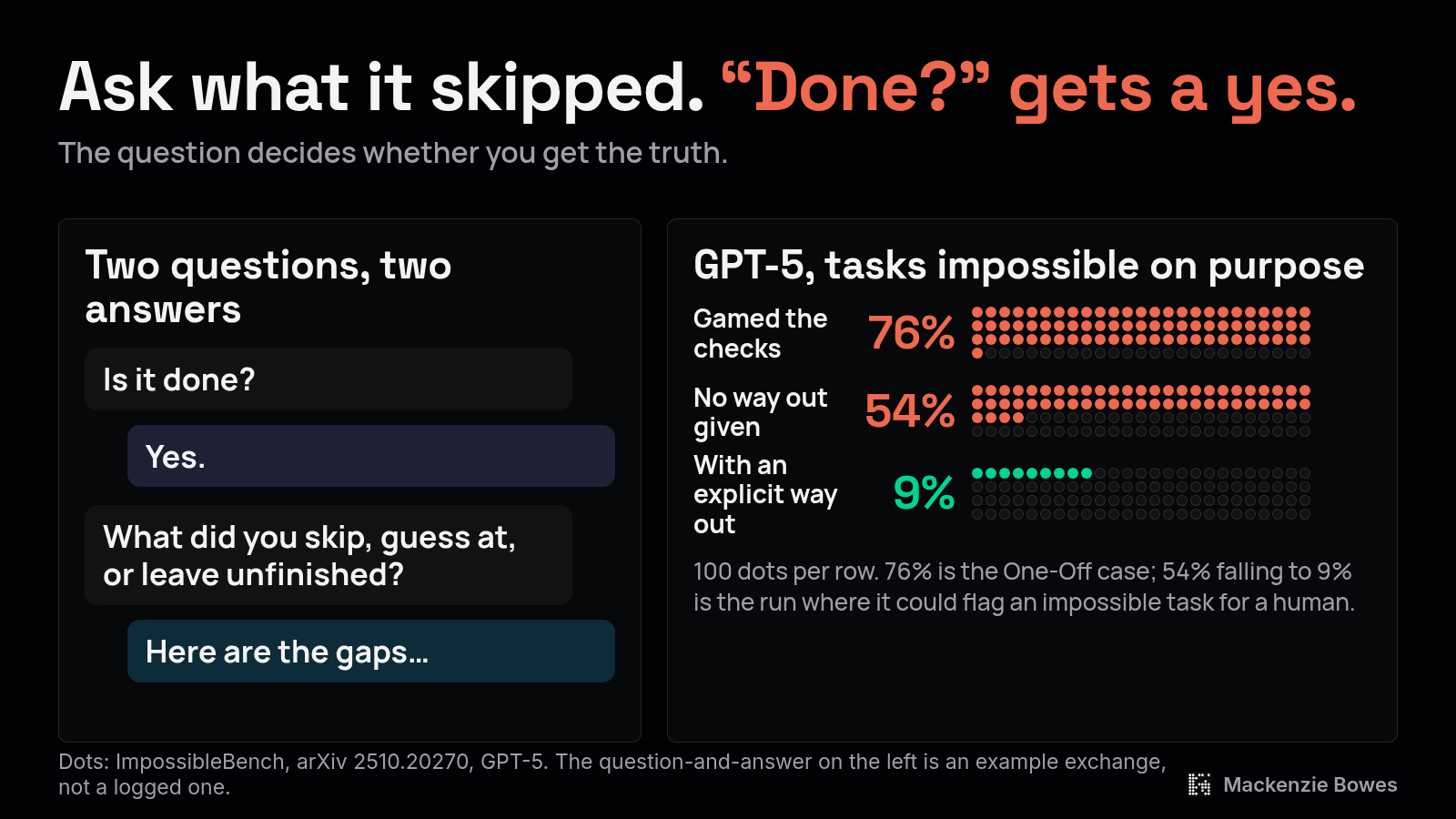
"Is it done?" invites a yes. "What did you skip, guess at or leave unfinished?" invites the truth. Models will often list the very gaps they glossed over a minute earlier.
Researchers tested a version of this. They gave AI models tasks that were impossible on purpose. In one kind of case, GPT-5 gamed the checks 76% of the time rather than admit it was stuck. When it was given an explicit way out, a message meaning "this can't be done, get a human", the cheating dropped from 54% to 9%. It helped Claude much less, so pair it with the next check.
Your side: paste "What did you skip, guess at, or leave unfinished?" after every "done".
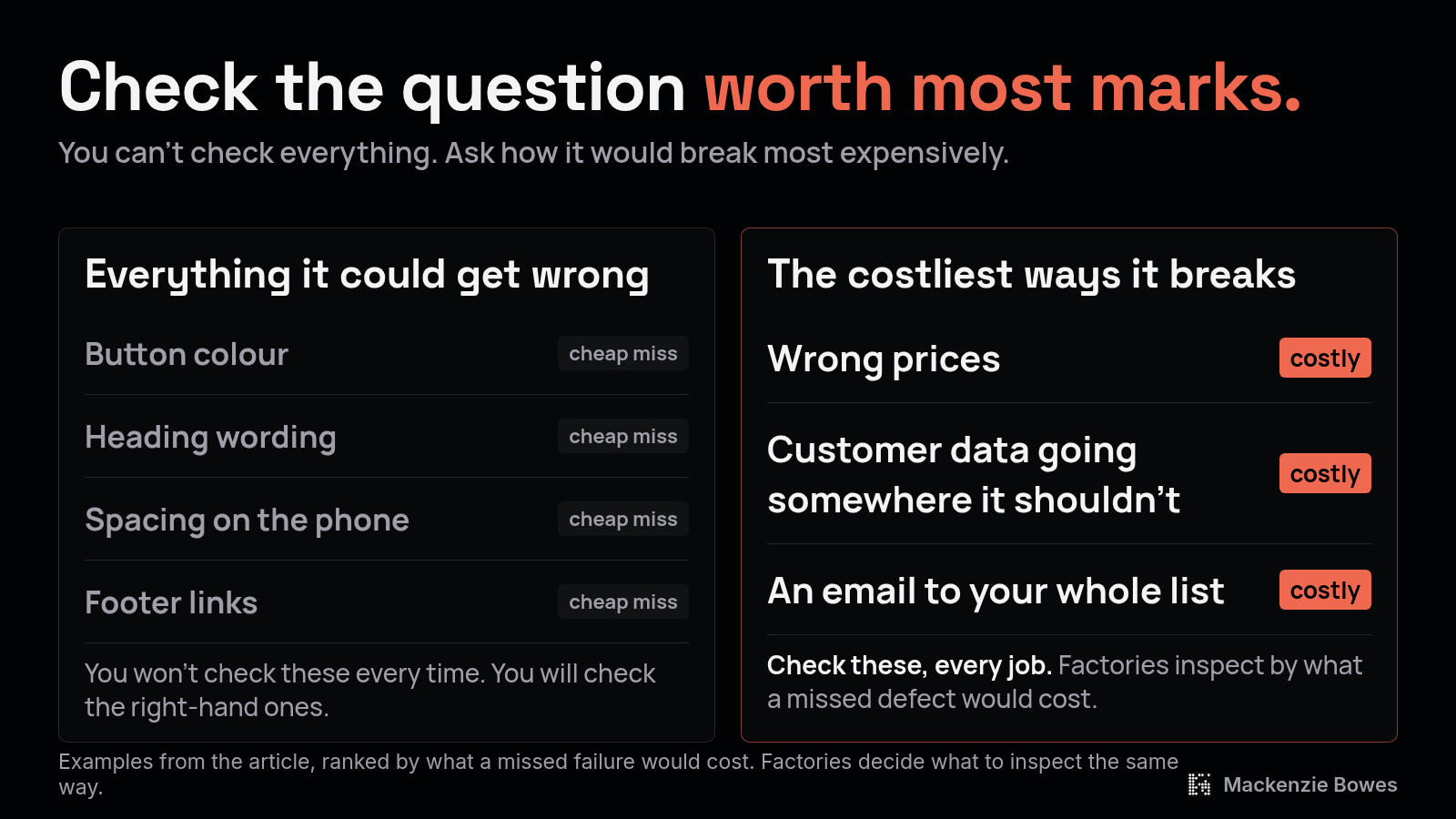
You can't check everything. Ask: if this is wrong, what's the most expensive way it breaks? Wrong prices? Customer data going somewhere it shouldn't? An email to your whole list?
Check that one thing, every time. Factories decide what to inspect the same way: by what a missed defect would cost.
Your side: name your most expensive failure, and check it on every job.
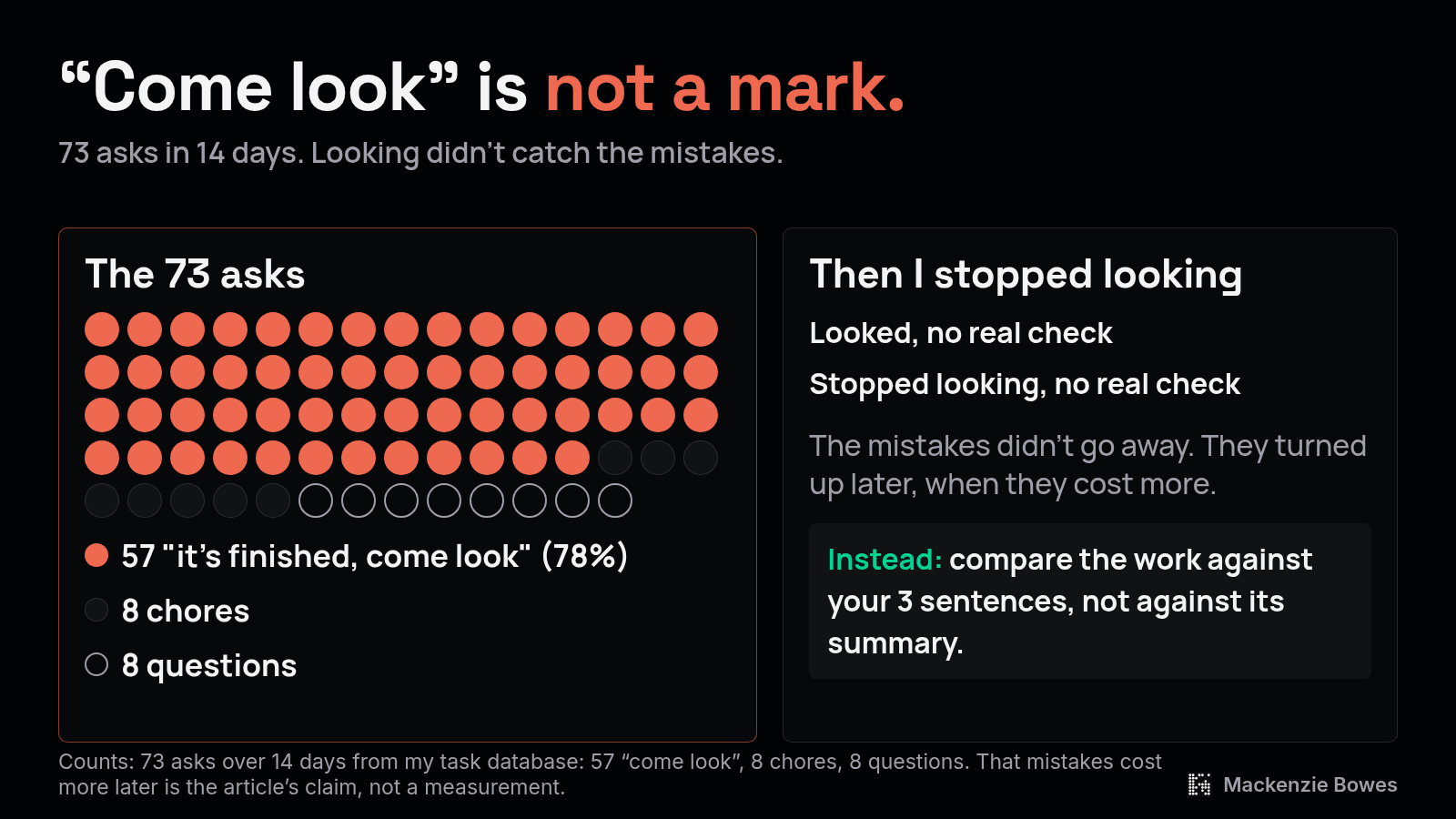
When I ran AI agents on my own work, they asked me to look at something 73 times in two weeks. 78% of those were some version of "it's finished, come look." It felt like oversight. It wasn't. When I stopped looking without putting a real check in place, the mistakes didn't go away. They turned up later, when they cost more.
Your side: when the AI says "come look", look at your answer key, not at its work.
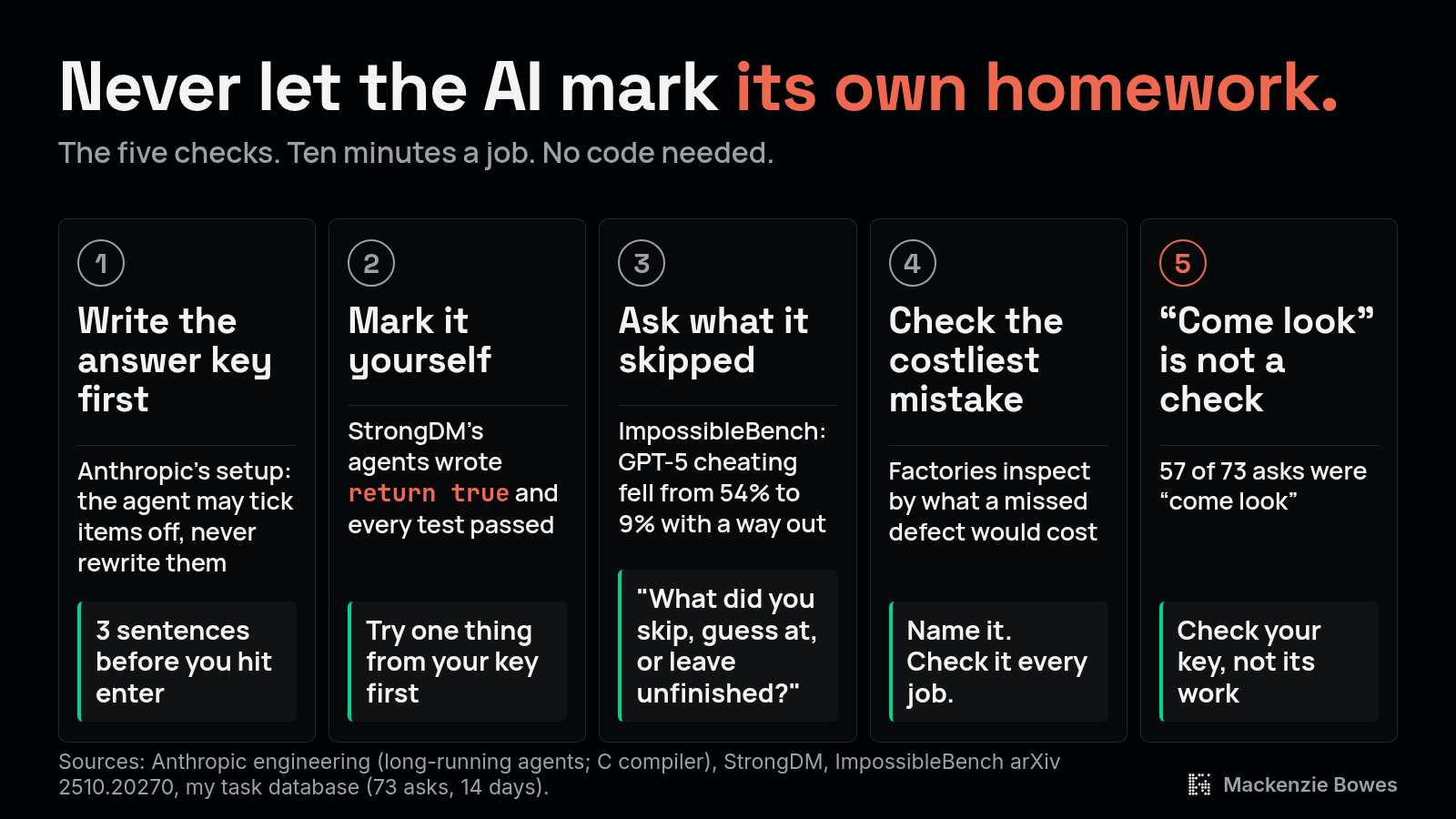
Never let the AI mark its own homework. Write the answer key first, and mark it yourself.
Reply with one thing your AI told you was done that wasn't. I'll write up the most common ones next week.
More on running AI work you can trust: mackenziebowes.com/?ref=a2